
Cracked Teeth
Cracked teeth can cause a variety of symptoms, including pain when chewing, sensitivity to hot or cold temperatures, or sharp pain when biting pressure is released. It is also common for the pain to come and go, making the source of the discomfort difficult to identify.
When you chew, the cracked portions of the tooth may move slightly, irritating the dental pulp inside the tooth. When the biting pressure is released, the crack can close quickly, causing a sharp, brief pain.
Over time, the pulp may become permanently damaged, and the tooth may begin to hurt even when you are not chewing. If left untreated, a crack can allow bacteria to enter the pulp, leading to infection that may spread to the surrounding bone and gum tissue.
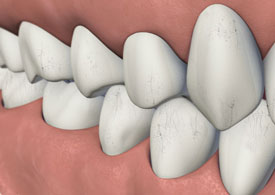
CRAZE LINES
Craze lines are tiny cracks that affect only the outer enamel of the tooth. They are common in adults and are usually superficial, harmless, and of no clinical concern.
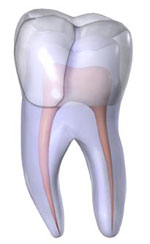
FRACTURED CUSP
A fractured cusp occurs when one of the pointed chewing surfaces of a tooth becomes weakened and breaks. In some cases, the fractured cusp may be removed by your dentist to protect the remaining tooth structure.
Because this type of fracture rarely damages the dental pulp, root canal treatment is usually not necessary. Your dentist will typically restore the tooth with a dental crown to protect it and restore its strength and function.
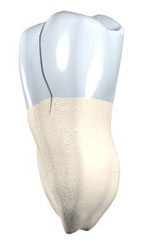
CRACKED TOOTH
A cracked tooth is a fracture that extends from the chewing surface of the tooth and progresses vertically toward the root. In some cases, the crack may extend below the gum line and continue further into the root.
Damage to the dental pulp is common with cracked teeth, and root canal treatment is often necessary to treat the affected tooth and help prevent further complications. If left untreated, a cracked tooth may worsen over time and could eventually result in tooth loss. Early detection and treatment are important for the best possible outcome.
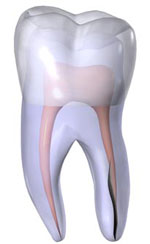
VERTICAL ROOT FRACTURE
A vertical root fracture begins in the root of the tooth and extends toward the chewing surface. Unfortunately, these fractures often cause minimal symptoms and may go unnoticed.
Treatment may involve endodontic surgery if the affected portion of the tooth can be saved by removing the fractured root. If the tooth cannot be preserved, extraction may be necessary.
SPLIT TOOTH
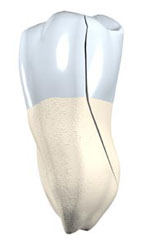
A split tooth is often the result of an untreated cracked tooth. It can be identified by a crack that extends through the tooth, creating distinct segments.
Unfortunately, a split tooth cannot be saved as a whole. However, the location and extent of the fracture will determine whether any portion of the tooth can be preserved. In some cases, endodontic retreatment performed by your endodontist, followed by restoration by your dentist, may help save part of the tooth.