
Traumatic Injuries
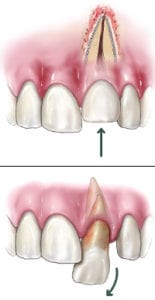
DISLODGED TEETH
Injuries to the mouth can cause a tooth to be pushed back into its socket. Your endodontist or general dentist may reposition and stabilize the tooth to allow it to heal properly. Root canal treatment is usually started within a few weeks after the injury, and medication such as calcium hydroxide may be placed inside the tooth to help protect the area. Eventually, a permanent root canal filling will be placed.
Sometimes, a tooth may be partially pushed out of its socket. In these cases, your endodontist or general dentist may reposition and stabilize the tooth. If the dental pulp remains healthy, no additional treatment may be needed. However, if the pulp becomes damaged or infected, root canal treatment will be necessary.
AVULSED TEETH
If an injury causes a tooth to be completely knocked out of your mouth, it is important to seek treatment immediately. If this happens, keep the tooth moist. If possible, gently place the tooth back into its socket. A tooth has the best chance of being saved when it remains moist.
If you cannot place the tooth back into the socket, you can keep it moist by placing it in milk or a glass of water with a pinch of salt. Your endodontist may begin root canal treatment depending on the stage of the tooth’s root development.
The length of time the tooth was outside the mouth and how it was stored can affect the type of treatment needed.
INJURIES IN CHILDREN
An injured immature tooth may require one of the following procedures to improve the chances of saving the tooth:
Apexogenesis
This procedure encourages the continued development of the root while allowing the dental pulp to heal. The exposed or injured pulp tissue is covered with medication to promote healing and continued growth. As the child gets older, the tip of the root (apex) continues to close, and the walls of the root canal become thicker.
If the pulp heals successfully, no additional treatment may be needed. The more fully the root develops, the better the long-term chance of preserving the tooth.
Apexification
During this procedure, the unhealthy or damaged pulp is removed. Medication is placed inside the root canal to encourage the formation of hard tissue near the root tip. This hardened tissue creates a barrier that allows the root canal to be sealed.
Because the root walls do not continue to develop after apexification, the tooth may remain more susceptible to fracture. It is important to have the tooth properly restored by your dentist to help protect and strengthen it.